
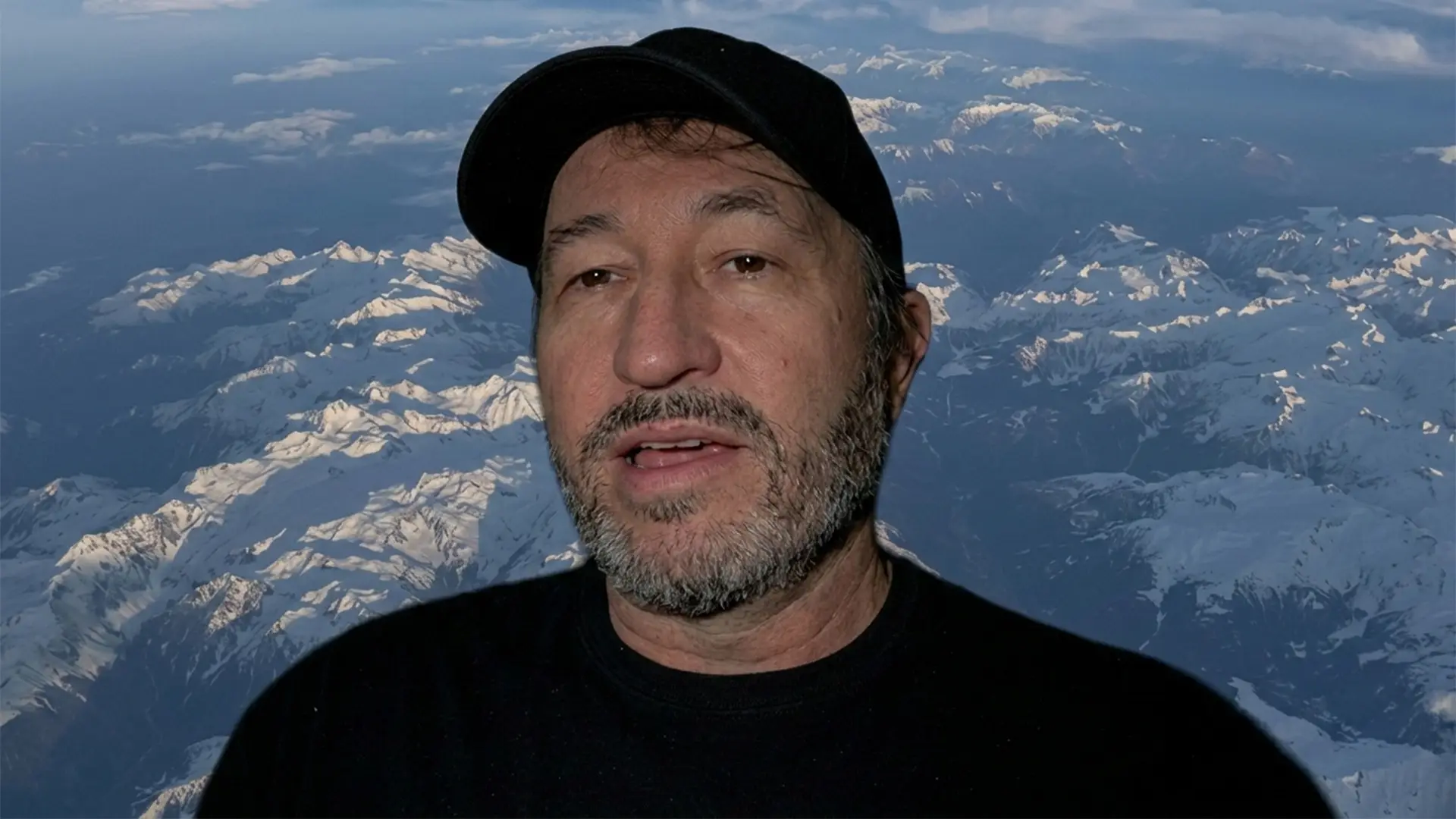
Right before the lights went out for Round 1 of World eX Season 9 in Melbourne, Heinz‑Harald Frentzen joined our latest Bizz Talk and made it very clear that he is anything but a fan of Formula 1’s new regulations. At the same time, the former Grand Prix winner remains convinced that electric mobility on the road is on the right track and will only become more attractive in the coming years.
On the new rules, Frentzen admitted that he first had to understand how the hybrid system now works. “I initially thought the driver is responsible for charging the battery and managing the energy,” he said. His original assumption: when drivers reduce downforce – “when they put the wings down” – this would automatically charge the battery, especially now that the turbo‑generator is gone and energy recovery relies mainly on braking. That, in his view, would have been a logical combination of aerodynamics and hybrid technology.
What he actually found left him unconvinced. “They charge the battery at full power,” Frentzen explained. “They have less power this year, and with this reduced power they also have to charge the battery on throttle, with special mappings out of the corners when they don’t need so much torque because of oversteer.” For him, this is not enough to really fill a battery. He also highlighted a basic problem with rear‑axle regeneration: under heavy braking into a hairpin “the rear end is very light, so you cannot take much torque from the rear tyres without locking the wheels very easily.” His verdict on the concept is unambiguous: he sees the regulations as “not efficient” and says openly that the way the system is implemented now is “bullshit” and will not provide much joy for teams or drivers.
Frentzen’s criticism comes from experience. In 2008 he worked on his own hybrid project and came to a different conclusion: “My first thought was that energy recovery can only work properly on the front wheels, because you have a lot more torque available there. You can safely charge the battery with the front brakes and front tyres.” If Formula 1 does not use this potential, he believes “they will struggle forever” and might be better off not doing hybrid at all than sticking to a flawed concept.
When the discussion moved from race cars to road cars, the tone changed noticeably. “Electro mobility is still a good thing,” Frentzen said. “Electric cars are becoming better and better each time.” He does, however, see limits in today’s batteries: “We did not make big progress in the last ten years,” he noted. The big step, in his view, will only come with new battery technologies, specifically solid‑state batteries which promise a kind of “dry” structure and much higher energy density. “Today’s cells are around 270 watt per kilogram,” and he considers it realistic that by around 2030 this figure could double or increase by around 75 percent. “If you have this kind of density in the batteries, this is basically it. They overtake combustion engines in range,” Frentzen said.
Even before that, he sees clear advantages in everyday use. “I still drive electric cars, and I also drive a combustion car, but every time I am in an electric car, life is so much easier,” he explained. Comfort is becoming more important: “Especially when you get older, you like to have comfort.” He still understands anyone who heads to the Nürburgring-Nordschleife with a combustion engine, but also points out that “some electric cars are already very competitive there.” For him the direction of travel is clear: “Nothing is really going to stop them (electric cars) from becoming popular one day.” A crucial trigger could be software: “If Tesla gets full self‑driving working as promised, that will be the kick‑off for the next generation,” Frentzen predicted.
Far away from the F1 paddock, Frentzen has built a very different life for himself in Spain. “I have nothing to do with racing, but I feel well. I do a lot of motorbiking when I’m in Spain. I spend a lot of time here,” he said. His elderly mother still lives there, and he decided to stay close to her – and in the process discovered his passion for motorbikes in 2022. Together with friends he has known since his youth, he founded a touring club: “We are called Transibérica Moto Tours.” Launched in September 2024, the project offers guided tours on weekends around the Costa Blanca “between Valencia and Alicante and also inland, because we have so much to show.” Winter is the best season: no leaves on the road, pleasant temperatures, empty routes. The concept is simple: “We provide the bikes. Guests can come with a helmet, we pick them up at the airport and then we go.” It is more passion than business, as Frentzen stresses: “We are not making tons of money. It’s mainly for pleasure.”
Motorsport, however, is still very present in the family – through his daughter Lea. In 2023 she accompanied him to Silverstone for his long‑planned “Beyond The Grid” podcast and saw Formula 1 up close for the first time. “She immediately became addicted to Formula 1 and went crazy for all the details,” he recalled. After that weekend she started her own Formula 1 Instagram channel and is now regularly seen at Grands Prix.
Between clear criticism of F1’s hybrid rules, a nuanced optimism for electric mobility, sweeping motorbike tours in Spain and a daughter who is building her own Formula 1 career on Instagram, Heinz‑Harald Frentzen showed in our latest Bizz Talk how diverse life after Formula 1 can be. He may call the current hybrid system “bullshit,” but his own mix of electric cars, analogue adventures and a front‑row seat to the sport’s new digital generation is anything but.